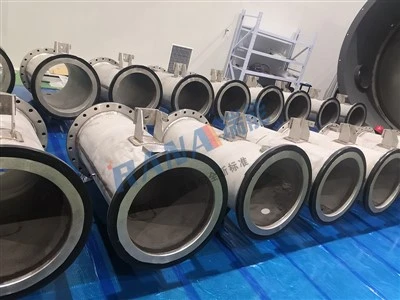
Analysis of the main materials of lined pipes
Jul 02, 2025
In the modern industrial field, lined pipes are widely used in chemical, petroleum, electric power, pharmaceutical and other industries due to their excellent corrosion resistance, wear resistance and long life. The core advantage of lined pipes lies in the choice of their lining materials. Different materials determine the applicable scenarios and performance of the pipes. This article will introduce the main materials and characteristics of lined pipes in detail.
Polyurethane (PU) lining
Polyurethane lined pipes are known for their excellent wear resistance and impact resistance, and are particularly suitable for conveying highly abrasive media such as slurry and mud. Polyurethane materials have high elasticity and can effectively reduce the impact of fluids on the inner wall of the pipe and extend the service life of the pipe. In addition, polyurethane linings also have good chemical corrosion resistance and are suitable for a variety of industrial environments.
Polyethylene (PE) lining
Polyethylene lined pipes are widely used in chemical, environmental protection and other fields due to their excellent corrosion resistance and flexibility. Polyethylene materials have stable chemical properties and can resist corrosion from a variety of acid, alkali and salt media, and are particularly suitable for conveying corrosive liquids. In addition, polyethylene lined pipes are light in weight and easy to install, which reduces construction costs.
Polytetrafluoroethylene (PTFE) lining
Polytetrafluoroethylene (PTFE) lined pipes are known as the "King of Plastics" and have strong chemical corrosion resistance and high temperature resistance. PTFE material is almost insoluble in any solvent, can resist corrosion from strong acids, strong alkalis and even aqua regia, and is suitable for extremely harsh chemical environments. At the same time, the friction coefficient of PTFE lined pipes is extremely low, which can reduce fluid resistance and improve transportation efficiency.
Rubber lining
Rubber lined pipes are widely used in mining, power and other industries due to their excellent elasticity and wear resistance. Rubber materials can effectively absorb fluid impact, reduce pipeline vibration and noise, and are particularly suitable for conveying highly abrasive or high-pressure media. Common rubber lining materials include natural rubber, butyl rubber and chloroprene rubber, and different materials are suitable for different working conditions.
Conclusion
The material selection of the lined pipe directly affects its performance and scope of application. Polyurethane, polyethylene, polytetrafluoroethylene and rubber have their own advantages. Enterprises can choose the most suitable lining material according to specific working conditions to ensure efficient and stable operation of the pipeline system. In the future, with the advancement of materials science, the performance of lined pipes will be further improved, providing more reliable solutions for various industries.