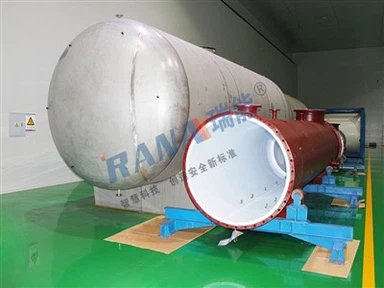
Working principle of lined pipe and its application in modern industry
Jul 03, 2025
Lined pipe is a technical solution that enhances the performance of pipes by adding special materials to the inner layer. It is widely used in chemical, petroleum, natural gas, water treatment and other fields. Its core principle is to extend the service life of pipes, improve transportation efficiency and reduce maintenance costs by lining the original pipes with corrosion-resistant, wear-resistant or high-temperature-resistant materials.
Basic structure and working principle of lined pipes
Lined pipes usually consist of two parts: outer base pipe and inner lining. The outer base pipe is responsible for bearing external pressure and mechanical stress, while the inner lining is in direct contact with the conveying medium, providing corrosion resistance, wear resistance or high temperature resistance. Common lining materials include polyethylene (PE), polypropylene (PP), fluoroplastics (such as PTFE), ceramics or stainless steel, etc. The specific choice depends on the nature of the conveying medium and the working environment.
The working principle of lined pipes mainly depends on the special properties of the lining material. For example, when conveying corrosive media, the lining material must have excellent chemical resistance to prevent the inner wall of the pipeline from being eroded; when conveying highly abrasive granular media, the lining material must have high hardness to reduce wear; in high temperature environments, high temperature resistant materials must be selected to ensure pipeline stability.
Advantages and application scenarios of lined pipes
The core advantage of lined pipes lies in their "softness overcomes hardness" characteristics - even if there are certain defects in the outer base pipe, the inner lining can still provide reliable protection, thereby greatly extending the overall life of the pipeline. In addition, lining technology can also effectively reduce fluid resistance, improve transportation efficiency, and reduce energy consumption.
In the chemical industry, lined pipes are often used to convey corrosive media such as strong acids and alkalis; in the field of oil and gas, lining technology can prevent pipeline damage caused by corrosive gases such as hydrogen sulfide during transportation; in the water treatment industry, lined pipes can avoid secondary pollution and ensure water quality safety.
With the advancement of industrial technology, the application scope of lined pipes continues to expand. In the future, with the further development of new materials and manufacturing processes, lined pipes will play an important role in more fields and provide reliable guarantees for the efficient and safe operation of modern industry.