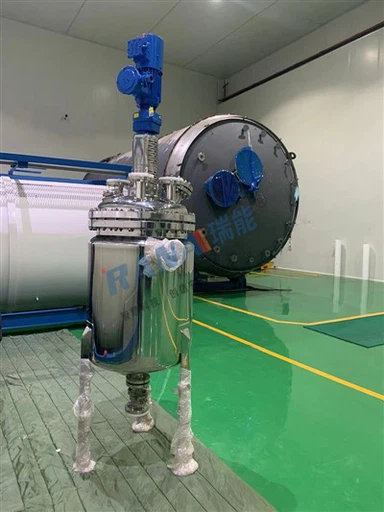
Lined Tanks: Innovative Solutions For Modern Industrial Storage
Aug 11, 2025
Safe and efficient storage equipment is essential in the fields of chemical industry, food processing, pharmaceutical manufacturing, etc. As an innovative product that combines traditional metal structure with advanced lining materials, lined tanks are gradually becoming a new choice in the field of industrial storage. It can not only meet the storage needs of various media, but also significantly improve safety and durability, bringing long-term benefits to enterprises.
The core advantage of lined tanks lies in their double-layer structure design. The outer layer is usually made of high-strength metal materials, such as carbon steel or stainless steel, to provide stable mechanical support and pressure resistance; the inner layer is made of special materials that are corrosion-resistant and high-temperature resistant, such as fluoroplastics (PTFE), polyethylene (PE) or epoxy resin, which directly contact the storage medium to effectively prevent leakage and pollution. This design not only retains the structural strength of metal storage tanks, but also solves the storage problem of corrosive media through lining materials.
In the chemical industry, many raw materials and finished products are highly corrosive, and ordinary metal storage tanks are prone to rust or even perforation due to long-term contact, leading to leakage accidents. Lined tanks are made of lining materials that can resist corrosion from a variety of chemicals, such as acids, alkalis, and salts, greatly extending the service life of the tanks while reducing maintenance costs. The food and pharmaceutical industries are more concerned about hygiene standards. The smooth inner wall of lined tanks is not easy to retain residual media, making them easy to clean and disinfect, and meeting strict hygiene standards.
In addition, lined tanks also have flexible customization capabilities. According to different storage requirements, the lining material, thickness, and structure can be adjusted to adapt to special working conditions such as high temperature, high pressure, or vacuum. For example, in semiconductor manufacturing, the storage of high-purity chemicals requires an absolutely pollution-free environment, and lined tanks can meet this requirement through special coating technology.
With increasingly stringent environmental regulations and improved industrial safety standards, the market demand for lined tanks continues to grow. It can not only help companies reduce the risk of leakage, but also reduce the hidden costs caused by equipment replacement and pollution control. In the future, with the advancement of materials science, the performance of lined tanks will be further optimized to provide safer and more efficient storage solutions for various industries.