

What is the wettability of PFA nozzles?
Dec 05, 2025
Wettability is a fundamental property that significantly influences the performance of various materials, especially in industrial applications. As a supplier of PFA (Perfluoroalkoxy) nozzles, understanding the wettability of PFA nozzles is crucial for both our customers and us. In this blog post, we will delve into what wettability is, how it applies to PFA nozzles, and why it matters in different scenarios.
What is Wettability?
Wettability refers to the ability of a liquid to maintain contact with a solid surface, which is determined by the balance between adhesive and cohesive forces. Adhesive forces are the attractive forces between the liquid and the solid, while cohesive forces are the attractive forces within the liquid itself. When the adhesive forces are stronger than the cohesive forces, the liquid tends to spread out on the solid surface, indicating high wettability. Conversely, when the cohesive forces are dominant, the liquid forms droplets on the surface, showing low wettability.
The wettability of a surface is commonly characterized by the contact angle, which is the angle formed at the three - phase boundary where the liquid, solid, and gas meet. A contact angle of less than 90° indicates that the liquid wets the surface well (hydrophilic or oleophilic depending on the liquid), while a contact angle greater than 90° means poor wetting (hydrophobic or oleophobic).
Wettability of PFA Nozzles
PFA is a fluoropolymer known for its excellent chemical resistance, high - temperature stability, and non - stick properties. These characteristics also have a significant impact on its wettability.
Low Wettability
PFA nozzles generally exhibit low wettability to most liquids, especially water and many organic solvents. This is due to the highly fluorinated nature of PFA. Fluorine atoms have a high electronegativity, which results in a low surface energy of the PFA material. Since liquids tend to spread on surfaces with high surface energy and bead up on low - surface - energy surfaces, PFA nozzles cause liquids to form droplets rather than spreading out.
For example, when water comes into contact with a PFA nozzle, it forms spherical droplets with a large contact angle, often greater than 100°. This low wettability is beneficial in many applications where preventing liquid adhesion and fouling is essential.
Chemical Resistance and Wettability
The chemical resistance of PFA also plays a role in its wettability. PFA is resistant to a wide range of chemicals, including strong acids, bases, and organic solvents. This means that most chemicals do not react with the PFA surface, and thus, they do not change the surface properties that determine wettability. As a result, PFA nozzles maintain their low - wettability characteristics even when exposed to harsh chemical environments.
Importance of Wettability in PFA Nozzle Applications
The wettability of PFA nozzles has several implications in different industrial applications.
Spray Applications
In spray applications, such as in painting, coating, or agricultural spraying, the wettability of the nozzle affects the droplet formation and spray pattern. The low wettability of PFA nozzles helps in creating well - defined droplets. Since the liquid does not adhere strongly to the nozzle surface, it can be easily ejected in the form of discrete droplets. This results in a more uniform spray pattern and better coverage.
Chemical Processing
In chemical processing plants, PFA nozzles are often used for tasks such as adding reagents or spraying cleaning solutions. The low wettability of PFA prevents the build - up of chemicals on the nozzle surface. This is crucial because chemical build - up can clog the nozzle, reduce the flow rate, and affect the accuracy of chemical dosing. By minimizing liquid adhesion, PFA nozzles ensure consistent performance and longer service life.
Food and Beverage Industry
In the food and beverage industry, PFA nozzles are used for applications like spraying flavorings, coatings, or cleaning agents. The low wettability of PFA makes it easy to clean the nozzles, which is essential for maintaining hygiene standards. Since liquids do not stick to the nozzle surface, residues can be easily removed during the cleaning process, reducing the risk of contamination.
Related PFA Products
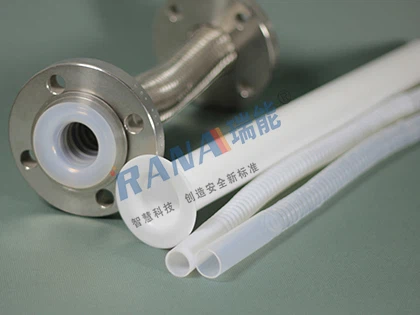
In addition to PFA nozzles, we also offer a range of related PFA products that share similar wettability characteristics. You can explore our Tubing PFA, PFA Hoses, and PFA Flexible Pipe for your specific needs. These products are also made from high - quality PFA material, providing excellent chemical resistance and low wettability.
Conclusion
The wettability of PFA nozzles is a key property that stems from the unique characteristics of PFA material. Its low wettability offers numerous advantages in various industrial applications, including better spray performance, reduced chemical build - up, and easy cleaning. As a PFA nozzles supplier, we understand the importance of this property and strive to provide high - quality products that meet the diverse needs of our customers.

If you are interested in our PFA nozzles or other related PFA products, we encourage you to contact us for more information and to discuss your specific requirements. Our team of experts is ready to assist you in finding the best solutions for your applications.
References
- "Fluoropolymers: Synthesis, Properties, and Applications" by John Scheirs.
- "Surface Chemistry and Wettability" in the Handbook of Surface and Colloid Chemistry, edited by Jacob N. Israelachvili.
- Technical literature on PFA materials provided by leading chemical manufacturers.