

What is the tensile strength of PFA sleeves?
Jan 05, 2026
Hey there! As a supplier of PFA Sleeves, I often get asked about the tensile strength of these nifty products. So, I thought I'd take a deep dive into what tensile strength means for PFA Sleeves and why it matters.
First off, let's talk about what PFA is. PFA, or Perfluoroalkoxy alkane, is a high-performance fluoropolymer. It's got some amazing properties like excellent chemical resistance, high thermal stability, and good electrical insulation. PFA Sleeves are widely used in various industries, from chemical processing to electronics, thanks to these great features.
Now, what exactly is tensile strength? In simple terms, tensile strength is the maximum stress that a material can withstand while being stretched or pulled before breaking. For PFA Sleeves, it's a crucial characteristic because it determines how much force they can handle without tearing or failing.
The tensile strength of PFA Sleeves can vary depending on a few factors. One of the main factors is the manufacturing process. Different methods of making PFA Sleeves can result in different molecular structures, which in turn affect the tensile strength. For example, if the PFA is extruded under certain conditions, it can lead to a more uniform molecular arrangement, enhancing the sleeve's ability to resist stretching forces.
Another factor is the quality of the raw materials. High - purity PFA resin will generally produce sleeves with better tensile strength. When we use top - notch raw materials, the PFA Sleeves are more likely to have consistent properties and be able to handle higher levels of stress. That's why at our company, we always source the best raw materials to ensure the quality of our PFA Sleeves.
Typically, the tensile strength of PFA Sleeves can range from around 20 to 30 MPa (megapascals). But this is just a general range, and it can be higher or lower depending on the specific product and its intended use. For applications where the sleeves will be subjected to high levels of pulling or stretching, we might offer PFA Sleeves with a higher tensile strength.
Let's take a look at some real - world scenarios where the tensile strength of PFA Sleeves matters. In the chemical industry, PFA Sleeves are often used to protect pipes and cables from corrosive chemicals. If the sleeves don't have enough tensile strength, they could tear when being installed or during normal operation, exposing the pipes and cables to the harsh chemicals. This could lead to costly repairs and potential safety hazards.
In the electronics industry, PFA Sleeves are used for insulation. When the cables are being moved around or installed in tight spaces, the sleeves need to be able to withstand some pulling forces without breaking. Otherwise, the insulation could be compromised, leading to electrical short - circuits or other malfunctions.
Now, you might be wondering how we test the tensile strength of our PFA Sleeves. We use a standard testing method called the tensile test. In this test, a sample of the PFA Sleeve is clamped at both ends and then slowly pulled until it breaks. The machine measures the force applied and the amount of stretching that occurs. From this data, we can calculate the tensile strength of the sleeve.
But it's not just about the raw numbers. We also pay attention to other factors like the elongation at break. Elongation at break is the percentage increase in the length of the sleeve before it breaks. A higher elongation at break means the sleeve can stretch more before failing, which can be an important consideration in some applications.
If you're in the market for PFA Sleeves, it's important to choose a supplier who can provide you with accurate information about the tensile strength and other properties of their products. At our company, we're committed to transparency. We can provide you with detailed test reports and data so you can make an informed decision.
We also offer a range of PFA products, not just sleeves. For example, we have High Purity PFA Tubing which is great for applications that require high - precision fluid transfer. And our PFA Pipe Liner is ideal for protecting pipes from corrosion.
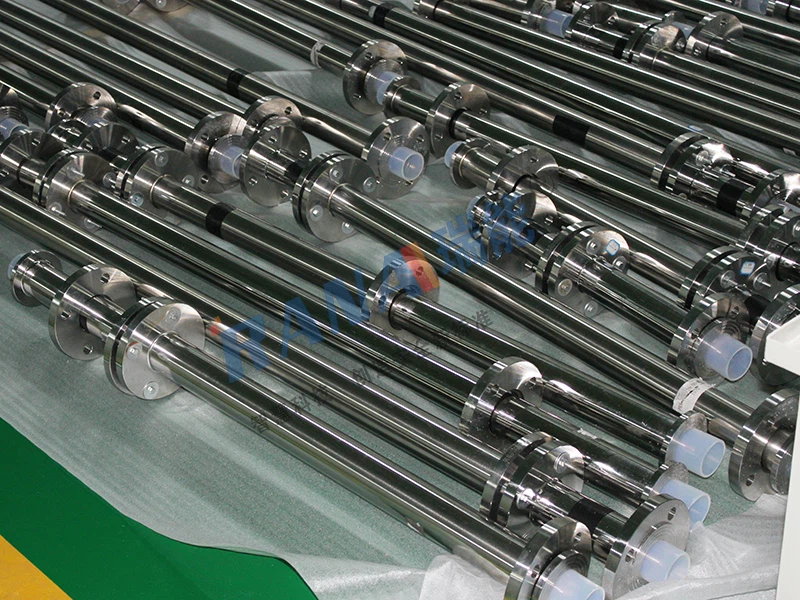

Whether you need PFA Sleeves for a small - scale project or a large - scale industrial application, we've got you covered. Our team of experts can help you select the right product based on your specific requirements, including the required tensile strength.
If you're interested in learning more about our PFA Sleeves or other PFA products, don't hesitate to reach out. We're always happy to have a chat and discuss how our products can meet your needs. Whether it's about the tensile strength, chemical resistance, or any other property, we're here to provide you with the information you need to make the best choice for your project.
In conclusion, the tensile strength of PFA Sleeves is a critical property that can impact their performance in various applications. By understanding the factors that affect tensile strength and choosing a reliable supplier, you can ensure that you get high - quality PFA Sleeves that will serve you well. So, if you're in the market for PFA Sleeves or related products, give us a shout, and let's start the conversation!
References:
- Standard testing methods for plastics
- Industry research on fluoropolymers and their applications