

How to select the appropriate spray pattern for PFA nozzles in different applications?
Nov 28, 2025
Hey there! As a supplier of PFA nozzles, I've seen firsthand how crucial it is to pick the right spray pattern for different applications. In this blog, I'll share some tips on how to make that selection, so you can get the most out of your PFA nozzles.
Understanding PFA Nozzles
First off, let's talk a bit about PFA nozzles. PFA, or perfluoroalkoxy, is a high-performance fluoropolymer known for its excellent chemical resistance, thermal stability, and non-stick properties. These qualities make PFA nozzles ideal for a wide range of applications, from chemical processing to food and beverage production.
PFA nozzles come in various shapes and sizes, each designed to produce a specific spray pattern. The spray pattern determines how the liquid or gas is distributed over a surface, which is essential for achieving the desired results in different applications.
Types of Spray Patterns
There are several common spray patterns for PFA nozzles, and each has its own unique characteristics and uses.
Full Cone Spray Pattern
The full cone spray pattern is one of the most popular choices. It produces a circular spray with a uniform distribution of droplets across the entire pattern. This pattern is great for applications where you need to cover a large area evenly, such as cooling, humidification, or coating. For example, in a chemical processing plant, a full cone PFA nozzle can be used to evenly distribute a chemical solution over a large tank.
Hollow Cone Spray Pattern
The hollow cone spray pattern forms a ring-shaped spray with a higher concentration of droplets at the outer edge. This pattern is ideal for applications that require a high impact force, such as cleaning or scrubbing. In a food processing facility, a hollow cone PFA nozzle can be used to clean large equipment surfaces effectively.
Flat Fan Spray Pattern
A flat fan spray pattern creates a rectangular-shaped spray with a high-velocity, flat stream of liquid. It's commonly used for applications like spraying pesticides in agriculture or applying coatings on flat surfaces. For instance, in a woodworking shop, a flat fan PFA nozzle can be used to apply a finish evenly on wooden boards.
Solid Stream Spray Pattern
The solid stream spray pattern produces a single, concentrated stream of liquid. It's used when you need to deliver a high-pressure, long-distance spray, such as in fire suppression systems or for jetting purposes in industrial cleaning.
Factors to Consider When Selecting a Spray Pattern
Now that you know the types of spray patterns, let's talk about the factors you should consider when choosing the appropriate one for your application.
Application Requirements
The first and most important factor is the specific requirements of your application. Are you looking to cover a large area, clean a surface, or deliver a high-pressure stream? Understanding the purpose of the spray will help you narrow down your options. For example, if you're trying to cool a large outdoor area, a full cone spray pattern would be a good choice.
Surface Characteristics
The surface you're spraying on also matters. If the surface is flat and large, a flat fan or full cone spray pattern might work well. However, if the surface has complex shapes or hard-to-reach areas, a hollow cone or solid stream pattern could be more effective. For instance, when spraying inside a pipe, a solid stream pattern can reach deep into the pipe.
Flow Rate and Pressure
The flow rate and pressure of the liquid or gas being sprayed are crucial. Different spray patterns require different flow rates and pressures to achieve the desired results. A high-pressure application might call for a solid stream or hollow cone pattern, while a lower-pressure application could use a full cone or flat fan pattern. You need to ensure that your PFA nozzle can handle the flow rate and pressure of your system.
Chemical Compatibility
Since PFA is known for its chemical resistance, it's important to make sure that the chemical you're spraying is compatible with the PFA material. Some chemicals might react with other materials, but PFA can withstand a wide range of chemicals. However, it's still a good idea to double-check the compatibility to avoid any issues.
Matching Spray Patterns to Applications
Let's take a closer look at how to match spray patterns to specific applications.
Chemical Processing
In chemical processing, you might need to mix, coat, or neutralize chemicals. For mixing chemicals in a tank, a full cone spray pattern can ensure even distribution. When coating a surface with a chemical solution, a flat fan pattern can provide a uniform layer. And for neutralizing acidic or basic solutions, a hollow cone pattern can deliver the neutralizing agent with enough force to react effectively.
Food and Beverage Industry
In this industry, hygiene and precision are key. For cleaning equipment, a hollow cone or solid stream pattern can remove stubborn residues. When spraying flavorings or coatings on food products, a full cone or flat fan pattern can ensure even coverage. And for humidifying storage areas, a full cone pattern can maintain the right humidity levels.
Agriculture
In agriculture, different spray patterns are used for various purposes. For spraying pesticides or fertilizers over large fields, a flat fan pattern is commonly used to cover a wide area efficiently. When watering plants in a greenhouse, a full cone pattern can provide gentle and even irrigation.
Fire Suppression
Fire suppression systems require a high-pressure, concentrated spray. A solid stream or hollow cone pattern is typically used to deliver water or fire suppressant agents over a long distance and with enough force to extinguish the fire.
Additional Considerations
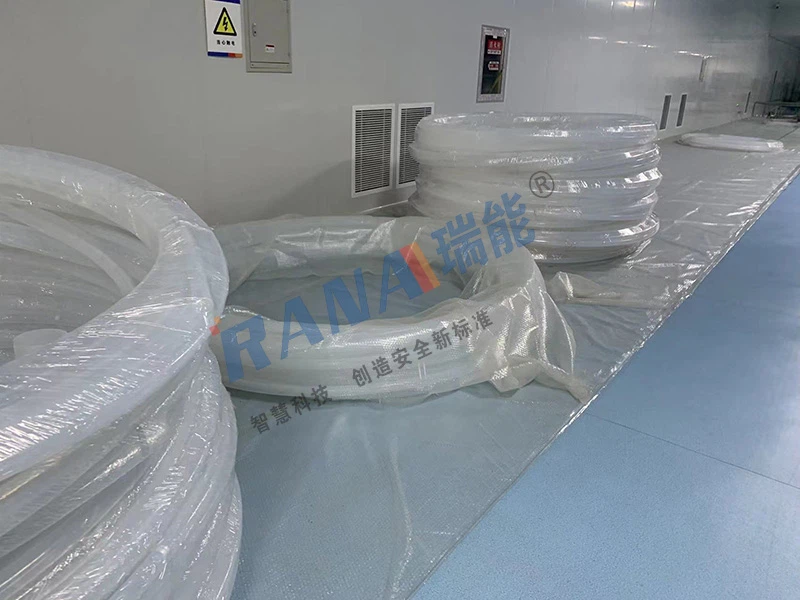
Apart from the spray pattern, there are other things to keep in mind when using PFA nozzles. You might also need to consider the tubing and piping that connect to the nozzles. For example, Tubing PFA is a great option for transporting chemicals to the nozzles. It offers excellent chemical resistance and flexibility. PFA Flexible Tubing is also useful when you need to bend the tubing around obstacles. And if you're dealing with high-pressure applications, PFA Pipe can provide the strength and durability you need.

Conclusion
Selecting the appropriate spray pattern for PFA nozzles is crucial for the success of your application. By understanding the different spray patterns, considering the factors like application requirements, surface characteristics, flow rate, and pressure, and matching the pattern to your specific needs, you can ensure optimal performance.
If you're still unsure about which spray pattern or PFA nozzle is right for you, don't hesitate to reach out. As a PFA nozzle supplier, we have the expertise and experience to help you make the best choice. Whether you're in the chemical processing, food and beverage, agriculture, or any other industry, we can provide you with the right solutions. Contact us to start a discussion about your requirements and let's find the perfect PFA nozzle for your application.
References
- Perry, R. H., & Green, D. W. (Eds.). (2007). Perry's Chemical Engineers' Handbook. McGraw-Hill.
- Lefebvre, A. H. (1989). Atomization and Sprays. Hemisphere Publishing Corporation.