

How does the flexibility of PFA Flexible Pipe change with temperature?
Jan 06, 2026
As a supplier of PFA Flexible Pipe, I've witnessed firsthand the growing demand for this remarkable product across various industries. One of the most frequently asked questions I receive from customers is about how the flexibility of PFA Flexible Pipe changes with temperature. In this blog post, I'll delve into the science behind this phenomenon, drawing on my experience and industry knowledge to provide a comprehensive understanding.
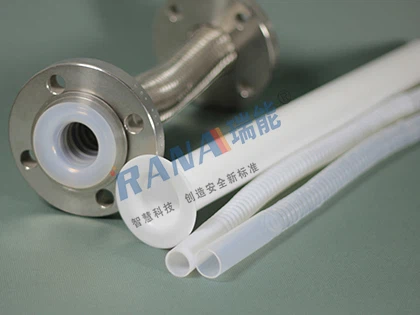

Understanding PFA Flexible Pipe
Before we explore the relationship between temperature and flexibility, let's first understand what PFA Flexible Pipe is. PFA, or perfluoroalkoxy alkane, is a fluoropolymer known for its exceptional chemical resistance, high purity, and excellent thermal stability. PFA Flexible Pipe is made from this material and is widely used in applications where chemical resistance, flexibility, and cleanliness are crucial, such as in the semiconductor, pharmaceutical, and chemical processing industries.
The Basics of Flexibility
Flexibility is a measure of a material's ability to bend or deform without breaking. In the context of PFA Flexible Pipe, flexibility is an important property as it allows the pipe to be easily installed in various configurations, even in tight spaces. The flexibility of PFA Flexible Pipe is influenced by several factors, including the material's molecular structure, wall thickness, and temperature.
How Temperature Affects Flexibility
Temperature plays a significant role in the flexibility of PFA Flexible Pipe. At low temperatures, the polymer chains in PFA become more rigid, reducing the pipe's flexibility. As the temperature increases, the polymer chains gain more energy and become more mobile, allowing the pipe to bend more easily.
Low Temperatures
When the temperature drops, PFA Flexible Pipe becomes stiffer and less flexible. This is because the cold temperature restricts the movement of the polymer chains, making them less able to slide past each other. As a result, the pipe is more likely to crack or break if bent at low temperatures. In extreme cold conditions, the pipe may become brittle and lose its ability to flex altogether.
High Temperatures
Conversely, at high temperatures, PFA Flexible Pipe becomes more flexible. The increased thermal energy causes the polymer chains to vibrate more vigorously, allowing them to move more freely. This makes the pipe easier to bend and shape, even in complex configurations. However, it's important to note that PFA has a maximum operating temperature, beyond which the material may start to degrade. Exceeding this temperature can lead to a loss of mechanical properties, including flexibility.
The Optimal Temperature Range
For most applications, the optimal temperature range for PFA Flexible Pipe is between -20°C and 260°C (-4°F and 500°F). Within this range, the pipe maintains a good balance of flexibility and mechanical strength. At temperatures below -20°C, the pipe may become too stiff for easy installation, while at temperatures above 260°C, the material may start to degrade.
Practical Considerations
When working with PFA Flexible Pipe, it's important to take temperature into account to ensure proper installation and performance. Here are some practical tips:
- Installation in Cold Weather: If installing PFA Flexible Pipe in cold weather, it's advisable to preheat the pipe to a more suitable temperature. This can be done using a heat gun or other heating device. However, care must be taken not to overheat the pipe, as this can damage the material.
- Operating in High-Temperature Environments: In high-temperature applications, it's important to ensure that the pipe is not exposed to temperatures above its maximum operating limit. This may require the use of insulation or other heat management techniques.
- Temperature Cycling: PFA Flexible Pipe may be subjected to temperature cycling during its service life. This can cause the material to expand and contract, which may affect its flexibility over time. To minimize the impact of temperature cycling, it's important to select a pipe with appropriate wall thickness and to install it with sufficient flexibility to accommodate thermal expansion and contraction.
Other Factors Affecting Flexibility
In addition to temperature, other factors can also affect the flexibility of PFA Flexible Pipe. These include:
- Wall Thickness: Thicker-walled PFA Flexible Pipe is generally less flexible than thinner-walled pipe. This is because the additional material provides more resistance to bending.
- Diameter: Larger-diameter PFA Flexible Pipe is typically less flexible than smaller-diameter pipe. This is due to the increased cross-sectional area, which makes the pipe more rigid.
- Additives and Fillers: Some PFA Flexible Pipe may contain additives or fillers to enhance certain properties, such as strength or chemical resistance. These additives can also affect the pipe's flexibility.
Applications of PFA Flexible Pipe
The unique combination of flexibility and chemical resistance makes PFA Flexible Pipe suitable for a wide range of applications. Some common applications include:
- Semiconductor Manufacturing: PFA Flexible Pipe is used in semiconductor manufacturing processes to transport highly corrosive chemicals, such as acids and solvents. The pipe's flexibility allows it to be easily installed in cleanroom environments, where space is often limited.
- Pharmaceutical Industry: In the pharmaceutical industry, PFA Flexible Pipe is used for the transfer of high-purity liquids and gases. The pipe's high chemical resistance and low extractables make it ideal for applications where product purity is critical.
- Chemical Processing: PFA Flexible Pipe is widely used in chemical processing plants to transport a variety of chemicals, including acids, bases, and solvents. The pipe's flexibility allows it to be easily routed around equipment and through tight spaces.
Conclusion
In conclusion, the flexibility of PFA Flexible Pipe is highly dependent on temperature. At low temperatures, the pipe becomes stiffer and less flexible, while at high temperatures, it becomes more flexible. The optimal temperature range for most applications is between -20°C and 260°C (-4°F and 500°F). When working with PFA Flexible Pipe, it's important to take temperature into account to ensure proper installation and performance.
If you're in need of PFA Flexible Pipe for your application, we're here to help. Our company offers a wide range of PFA Flexible Pipe, PFA Nozzles, and High Purity PFA Tubing to meet your specific requirements. Contact us today to discuss your needs and learn more about our products. We look forward to working with you!
References
- "Fluoropolymers: A Comprehensive Guide" by John Murphy
- "Handbook of Plastics, Elastomers, and Composites" by Charles A. Harper
- Technical literature provided by PFA manufacturers