

Does ptfe lining sheet have good electrical insulation?
Dec 02, 2025
Hey there! As a supplier of PTFE lining sheets, I often get asked if these sheets have good electrical insulation. Well, let's dive right into it and find out.
First off, let's talk a bit about what PTFE is. PTFE stands for polytetrafluoroethylene. It's a synthetic fluoropolymer of tetrafluoroethylene. You might know it better by its brand name, Teflon. This stuff is pretty amazing. It has a bunch of great properties, and one of the most important ones is its electrical insulation capabilities.
PTFE has an extremely high dielectric strength. Dielectric strength is basically a measure of how well a material can resist an electric field without breaking down and conducting electricity. In simple terms, the higher the dielectric strength, the better the material is at keeping electricity from passing through it. PTFE has a dielectric strength that's way up there compared to a lot of other materials. This means that it can handle high - voltage situations without allowing electricity to leak through.
Another factor that contributes to PTFE's excellent electrical insulation is its low dielectric constant. The dielectric constant is related to how much energy a material can store in an electric field. A low dielectric constant means that PTFE doesn't store a lot of electrical energy within itself. This is great because it reduces the chances of electrical losses and interference. For applications where you need a stable electrical environment, like in electronic circuits, PTFE's low dielectric constant is a huge plus.
PTFE also has very low dissipation factor. The dissipation factor measures how much electrical energy is lost as heat when an alternating current passes through a material. Since PTFE has a low dissipation factor, it doesn't generate much heat when electricity is applied to it. This is important because excessive heat can damage the material and the surrounding components. So, in high - frequency electrical applications, PTFE lining sheets can perform really well.
Now, let's take a look at some of the different types of PTFE lining sheets we offer and how their electrical insulation properties might vary.
We have the Glass Fabric Backing PTFE Sheet. The glass fabric backing adds some extra mechanical strength to the PTFE sheet. But does it affect the electrical insulation? Well, the glass fabric itself is also a good insulator. So, when combined with PTFE, it actually enhances the overall electrical insulation performance in some cases. The glass fabric can help distribute the electrical stress more evenly across the sheet, reducing the risk of local breakdowns.
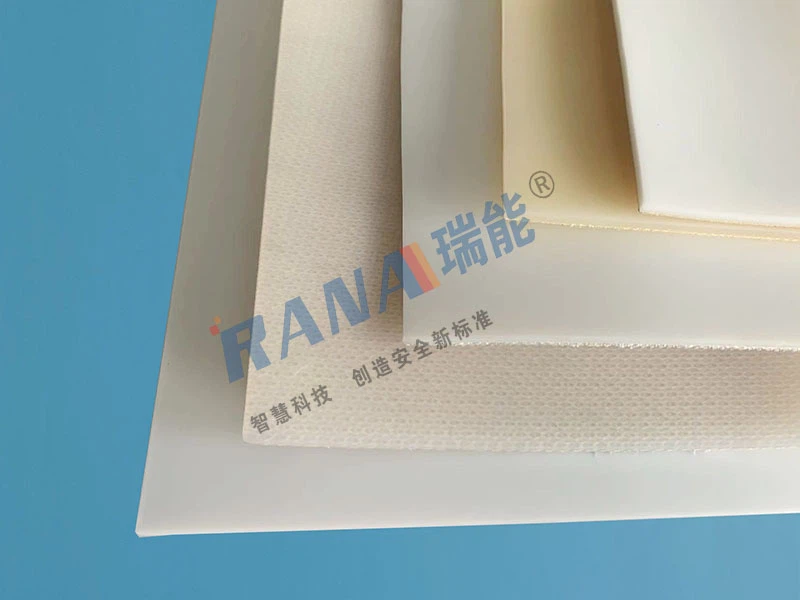

Then there's the Plastic Llining Sheets. These sheets are made with a plastic backing, which can be customized according to the specific needs of the application. The plastic used in the backing is carefully selected to maintain or even improve the electrical insulation properties of the PTFE. For example, some plastics can act as a barrier to moisture, which can be a problem for electrical insulation. Moisture can reduce the dielectric strength of a material and increase the chances of electrical leakage. So, by keeping moisture out, these plastic - backed PTFE lining sheets can provide reliable electrical insulation over a long period of time.
Our PTFE Fabric Backing Lining Sheet is another option. The PTFE fabric backing not only provides good mechanical support but also has its own electrical insulation properties. The combination of the PTFE sheet and the PTFE fabric backing creates a double - layer of insulation, which can be very effective in high - voltage and high - frequency applications.
In real - world applications, PTFE lining sheets are used in a wide range of industries because of their excellent electrical insulation. In the electronics industry, they're used in printed circuit boards (PCBs). PCBs need to have good electrical insulation to prevent short - circuits and ensure the proper functioning of electronic components. PTFE lining sheets can help achieve this by providing a reliable insulation layer between different conductive parts of the PCB.
In the power generation and transmission industry, PTFE lining sheets are used in high - voltage cables and transformers. These applications require materials that can withstand high voltages and high temperatures. PTFE's high dielectric strength and low heat generation make it an ideal choice for these demanding environments.
In the aerospace industry, where weight and performance are critical, PTFE lining sheets are used in electrical wiring and connectors. Their lightweight nature combined with their excellent electrical insulation properties make them a great fit for aerospace applications.
So, to sum it up, PTFE lining sheets definitely have good electrical insulation. Their high dielectric strength, low dielectric constant, and low dissipation factor make them suitable for a wide range of electrical applications. Whether you're working on a small electronic project or a large - scale power generation system, PTFE lining sheets can provide the insulation you need.
If you're in the market for PTFE lining sheets for your electrical insulation needs, don't hesitate to get in touch. We can help you choose the right type of PTFE lining sheet for your specific application. Whether it's the Glass Fabric Backing PTFE Sheet, Plastic Llining Sheets, or PTFE Fabric Backing Lining Sheet, we've got you covered. Reach out to us, and let's start a conversation about your requirements.
References:
- "Handbook of Polytetrafluoroethylene (PTFE) and Related Fluoropolymers"
- "Electrical Insulation Materials: Properties and Applications"